This is hopefully the first of many articles designed to increase knowledge and awareness of our hockey community. We are going to visit with some of the country’s very best hockey coaches, get to know them and divulge their opinions around how to navigate what has become an overly convoluted hockey roadmap. Insights and coach’s opinions will instruct on how to improve player skills, both on the ice and off. Nowadays, there is no one proper path to achieving a player’s long term goals, whether it be to play college hockey or even pros. We will also address the parent’s role in a sport where hockey parents are often much more invested in terms of money and time spent than they might be in other sports.
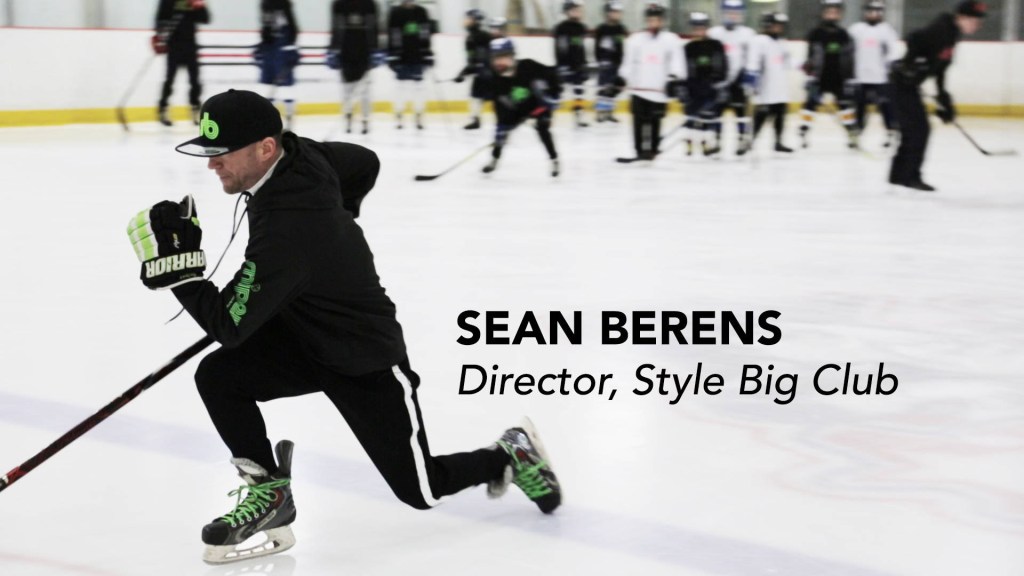
I could not be more pleased and there is nobody more fitting than this Chicagoland legend to be our first guest. Sean Berens has been coaching AAA hockey at Team Illinois for 15 years and I will personally tell you that in all my years of hockey this guy was one of the very best players I have ever seen. When asked who was the best Chicago guy I ever played against, Berens, in my opinion, is in a two way tie for #1 (cap tip to Nicky down there in AZ). Sean had NHL quickness and mitts, the only problem was that he grew up in an era where NHL was taking size over skill and a guy of his stature had the deck stacked against him; fortunately, this has changed and if he were graduating now from his alma mater Michigan State where he led all of NCAA in goals, he’d surely have had that long and well-deserved NHL career. The downside would be that the thousands of kids he has coached over the past fifteen years might not have benefitted from his tutelage and the state of hockey in Illinois is better because of Sean.
Sean grew up playing for his favorite coach, his dad, on the Northwest Chargers before moving to Team Illinois after squirts, where he played peewees, bantams and first year midget.
Edison: Sean, who was your most impactful coach growing up?
SB: Besides my father, it was John (Chico) Wallin, hands down. No one made you believe in yourself like Chico. I remember one day when we were having a little team party and we were playing HORSE. I had H-O-R-S and I had to make this ridiculous baseline shot and I’m like “There’s no way I’m gonna make this,” I took the shot and of course I missed. He threw the ball back at me and said, “Do it again, and say you’re gonna make the shot!” I’ll never forget it… I held the ball up, I focused, and I said I’m gonna make it.” “The thing is, at that point, I actually knew I was going to make the shot. And swoosh!”
Sean had a lot of strong coaches as he moved up the ranks, Troy Ward at DuBuque in the USHL, Bob Bourne inn Vegas, Rick Vaive in Calgary, John Anderson at the Wolves and the legendary Ron Mason while at Michigan State, to name a few. Crazy are the little things that touch us and stay with us forever. Sean shared a moment he had with Denver University head coach Frank Serratore during a recruiting trip.
SB: Frank was my brother Rick’s coach at Rochester in the USHL. (Serratore later took the DU job and Sean’s brother, Rick ended up playing for him there, too). I remember they were playing for the national championship vs the Madison Capitols at the old Compuware barn, I was like a peewee at the time and they let me be stick boy for the day. They ended up winning it all and afterwards during the party, Coach Frank called me over and gave me this little USA pin. He said, “Sean, thanks for helping us out today, I want to give you this pin as a token of our appreciation” and then I remember him saying that I’m going to play for him one day. I had this big hunk of an old Chargers pin with me- it was back in the day when we carried all our pins on our pin towel to trade at the rinks, so I gave it to him. Fast forward like ten years and now I’m in his office on a recruiting trip and we’re sitting at his desk, he opens the top drawer and he pulls it out. I couldn’t believe it. He still had that pin all these years later.
Edison: That’s unreal. So, why didn’t you go to Denver then?
SB: I don’t know, Denver was still pretty small then and Michigan State was the big time. That, and my brother went there, kind of wanted to make my own name.
He’s right. Michigan State was a behemoth hockey school at the time, with a hall of fame coach and they busted out all the stops on his recruitment trip there, the red carpet, and rightfully so, as he certainly made his own name for himself, scoring 158 pts in 163 games played, including 84 goals. And in 97-98 Sean was an NCAA All-American as he led the entire country in goals.
As a result of hockey, Sean played for and lived in 14 different cities, four of those cities in Europe. I knew we could talk about Sean’s career for hours, and another time, with a few brews maybe we will. But at this point, I thought maybe some rapid fire would provide a segue into some coaching topics.
Edison: The best youth hockey player you ever saw- played with or against?
SB: The best, or most skilled?
Edison: Most skilled.
SB: Sergei Samsonov
Edison: Who was the best?
SB: Youth? I’ll stick to Illinois… maybe Jeff Edwards. Battaglia was good. Jimmy Andersson was really good, too.
Edison: And as you got older?
SB: The most skilled player I’ve ever seen in my life was Richard Keyes, I played with Marty St. Louis, I played with Chris Drury, Richie was the most talented play I’ve ever seen.
Edison: I remember Keyes, what ever happened to him?
SB: He’s doing great, raising a daughter and coaching in Kalamazoo, but that guy had this effortless explosiveness and these lightning quick shifts that I’ve never seen before but unless you played in the NAJHL or against us at Michigan State you wouldn’t know it cuz he left school early.
Edison: I remember him in the North American league, the K-Wings were our rival and he was ridiculous. Him and Chad Alban both went from K-zoo to Michigan State.
SB: Yup, he was also one helluva musician, too, we were in a band together, he was a keyboard player and singer and he was gooooood.
Edison: See, now that’s awesome, you have other talents outside of hockey, one of those talents has enabled you to create maybe the best hockey school in the area and I want to talk about that, I love how you’ve set up the four pillars for your players to identify with, but first… if Keyes was the most talented who was the best?
SB: Marty St. Louis, hands down. After my rookie year in Vegas I got traded to Saint Johns up in Calgary (AHL) and I’ve never seen a better hockey player.
Edison: That’s badass you got to play with a guy like that… ok… so we already talked about how size took over during that era, St. Louis was 5’8 in the book so I’m guessing he’s 5’7. A few of the smaller guys managed to slip through, how did he do it?
SB: Danny, you never saw a guy work harder than him. No coincidence he’s also the hardest working player I’ve ever seen in the game. That guy was in the locker room doing his workouts prior to the skate. He was on the ice an hour before, shooting pucks. And then stayed a half hour after everyday.
Edison: Talk about that correlation between hard work and success. Everybody who achieved the level of hockey you did put in a lot of hard work. But now you’re talking about a different level of hard work. How do you describe that?
SB: You can fabricate that to an extent, but I think there’s a wiring that you have to have as a person that wants to compete and does not accept getting shut out or shut down; that type of personality, I think it’s genetic. You can’t just tell a player to work harder and (*snap) expect it to happen. You need to have that mentality and even for us at AAA level, you see the different levels of compete. And the guys that really do understand the extra effort and the commitment and the focus and how hard you have to compete, those guys always have the most success. We’re at the point, working with squirts and peewees that you can still get away with god given skillsets and just a little bit of genetic size and strength. You can get away with that at this level, this is not real hockey. This is development hockey, but you can always understand the kids that don’t have that next level of compete and commitment to really hone their skills to take them to the next level… those kids fizzle out.
SB: And the game has changed. The evolution of the game right now with kids being on the ice eleven months of the year, inundated with skills programs and Pavel Barber and YouTube and it’s like an explosive fountain of hockey and hockey information… the ones that have the hunger will make it and the ones who don’t will get passed.
Edison: 100%. Let’s talk about “compete.” Often times the most talented player doesn’t make it. The best peewee I ever saw was this kid out of St. Claire Shores… this kid would score 4, 5 goals a game at the AAA level, then he disappeared. And I’m convinced this happens cuz at about 13, 14 years old these guys who have been operating on god given talent often never had to learn how to work and those guys who have been hovering just below them, down here, are now seeing dividends from that extra work effort and start passing those guys up… then the more talented guy says, “Oh crap, I gotta learn how to work…” but then it’s too late. It’s tough to change bad habits.
SB: There’s validity to that, and in the modern era game, it’s becoming less prominent cuz of these kids that do get on the ice twice a day and do do the extra work. Back in the day, your naturals could still make it without the incredible work ethic and compete. They were just that much better.
Edison: Yeah… you’re saying there’s so much more happening now.
SB: yeah, what I equate it to is your best were here… your Gretzkys, your Hulls all the dudes on your GOAT SKiNS socks… then your 3rd and 4th line guys were here… ya know, smoking, drinking, hanging out taking the summers off. Well now, the difference is… with the amount of training they have, all the off-ice, the access to skates, plus the mandatory stuff… the kids that have the heart and they’re athletic, well, they’ve closed the gap. Ya know, there are no Wayne Gretzkys skating around five guys with fifteen feet of room on each side of them. You watch one of those classic NHL games, Gretzky has 35 feet of space in every direction, of course he’s gonna make a helluva play! But watch now… with all the stuff these kids have… if they’re athletic… if they’re athletic, and 90% of anybody who makes it is purely genetics- fact. You’re gonna make it whether you go to T.I., whether you go to Mission, the Fury, Storm… If you’ve got genetics you’re going to make it 90%. The difference is that 10% that you may pick up during the most influential parts of your development that drives players to that next level… think about it, all these dudes on the PGA tour, the top money guys… they had teaching pros at 7, 8, 9… they didn’t just get out there and bang balls til the sun went down. They had somebody actually instruct where it went. I didn’t have shit. I woke up at 18 and said I might wanna try golf and I have the worst golf swing on the planet!
Edison: Ha, and to your point, you’ve got the genetics and you still stink! Lol
SB: Absolutely! And if I would have been on the range with a teaching pro at 7, 8, 9 I might be scratch. So what gives?! I’m athletic, why’s my 3 wood broke and my 5 iron in the water?!?
Edison: Best hockey memory?
SB: Easy. Mites, double overtime goal against Glenview to win NIHL. Scored against Bobby Boope. After that, I’d say hearing my name called after making the US National team. Winning high school state championships at the old Chicago Stadium, those were cool, too.
(Author’s note:) Let’s stop a second to let this sink in. Sean made the US National team, he played at the Olympics festival. Won the CCHA championship at the old Joe. Was an NCAA All-American. Led the nation in goals. Played pro fourteen years but his greatest hockey memory was when he was a mite… eight years old, he said it was in the old “wooden rink,” (Um, Winnetka?) and he told us exactly who was in nets. For all you hockey parents out there, the reason we’re investing so much time and money into this great game for our kids is not because of what’s waiting for them at the finish line. The ride has already begun. And you’re on it right now. This is what it’s for and what it’s about and why we do it… the memories have already begun piling up, don’t get distracted with the outcome and risk missing the ride. You will regret it. It goes by real fast.
Edison: You just gave me another great segue… Ok, so all of this, all these years of coming up on hockey… and as you answer this, think about being able to say this to all the hockey parents out there… what is the greatest gift hockey ever gave you?
SB: Wow! That is a really tough question, Danny. I would say being able to share it with my dad and my brother, I mean my dad still helps me out we’ll go on the road together and we still have pizza and we talk about the game. This year our 10s struggled yet here we are talking about who could play where in certain situations and he’s the smartest hockey guy I’ve ever known, Danny. For a guy who never played, he’s a master connector of ideas and applications. I mean, he called a move the 10 o’clock 2 o’clock and he had us repping up and down the ice for years… put the puck up at 10 o’clock, rip it back down, then out to 2 o’clock. He had no idea he was teaching us the toe drag, he didn’t even know what a toe drag was back then, yet here we are practicing the toe drag, lol.
But you cant just say what’s the single greatest thing, I mean I just went down to Arizona and hung out with Bencurik and Naumenko. I don’t hang out with anyone from high school, everyone I go out with, everyone I talk to, everyone I go on vacation with is a hockey person. I have so many hockey friends as a result of this game. That’s the gift. Locker rooms, bus rides, those are the treats and that’s where these bonds happen, not to mention the battles on the ice. And the parent component, too, they love this stuff, my dad’s best friends to this day are dads from our old Chargers team.
Edison: Speaking of parents, have you ever taken instruction from parents in the stands?
SB: RICKY McDONALD”S DAD! At Owl drive, he was on the glass at the door next to the Zamboni door, and he yelled “Score a goal!” So, I punched the faceoff, split the D skated down and scored. Hahaha! And that’s it. That’s the only time.
Edison: Are you trying to tell me that you never shot a puck or backchecked cuz you were reminded to by somebody in the stands?!?
SB: Not one time! I’ve asked a couple to stop, they can’t hear us both. You can’t listen to your coach and listen to the stands at the same time, but I forgive all the parent coaches, you can’t fault them for wanting to help their innocent non-professional player kid who they’ve been helping in every aspect of life. Of course, you think your kid is helpless and harmless and can’t do anything on his own…. Geezus, man! You don’t know what you’re doing. Like, why would you think that you can tell them what they’re supposed to do?
Edison: Ok, so you have two kids on the bubble at tryouts, one kid has crazy parents, what do you do?
SB: Do kids get cut because of their parents? The answer is yes. That’s affirmative. If you’ve got a bad wrap as a parent, your kid has to be extra good, needs to work extra hard to overcome the dash that you’ve provided before the first tryout session. Because it’s about the whole season, and it’s a chemistry thing. To have success, you have to have the right people involved and when you have the wrong people involved it’s a grind. I’ve been on both sides, some seasons you’ve got everyone loving one another, and the next, everyone hates each other- but why? I’m not doing anything different.
But it comes with the turf. The problem with hockey is its become such an investment, a vested interest and people can’t help but try to get involved and control things to their favor. The reality is 92% of them aren’t even going to play college club hockey. The value of hockey is how it helps you build yourself and sadly, it often takes too long for some to realize that.
Edison: Speaking of building something, how the heck did you manage to build this enormous Style Big hockey camp to the massive extent you have?
SB: Haha, we started this thing fifteen years ago, (Matt) Noga and I, and we called it Tricks of the Trade. Our frigg’in logo was four aces, Lol! We had two kids show up that first year, 2 kids! But we stayed with it… we had four camps, one was shooting, one was skating, one was passing, one was stickhandling.
Edison: How long did it take you to build it past two kids?
SB: It took a grind Danny, and I was out there with pamphlets at all the rinks, I had to push, it took a solid year before we had anything that resembled a hockey camp.
Edison: I love how you do it, talk about the four different components you utilize.
SB: Well that was based on that old logo, the four aces. We have four characters and each represents a skillset. The ace of spades was the shooter, or the “sniper.” The ace of clubs was the skater or the “wheeler.” The ace of diamonds was the stickhandler or the “dangler.” And then the ace of hearts was the hero.
Edison: What’s the hero?
SB: The hero is the hardest worker, the guy who doesn’t quit. You gotta be the first person who picks up someone who fails, you have to be working hard when the coach isn’t watching. It’s the guy who blocks shots, the guy who never shows up on the scoresheet but everyone else in the room wants to be like.
Edison: I like the hero!
SB: The hero is the best, man!
Edison: And then your players choose who they want to base their game on, who they relate to.
SB: That’s right. You put on that hero sweatshirt and you’re in character, you’re telling guys to stick with it and keep working hard.
Edison: I’m gonna give you some attributes and you rank them, k?
SB: Passing number one, skating number two, stickhandling number 3, shooting number four and you’re gonna take hockey IQ and put it together with passing for number one. Then discipline. Discipline is like work ethic, do you wanna go down to the basement and shoot your pucks today? Discipline arches over the whole darn thing. Without discipline, forget it. You’re gonna go the bar. You’re gonna take another day off. Forget it, find something else to do.
Discipline helped me build this whole thing. I didn’t quit when we got our asses kicked that first year. We built this thing off straight up sweat and product. Our product is the best, it’s not about the cool colors, kids come off the ice and they love it. The way we help them understand what they’re supposed to do, and we’re passionate about it… they feel it and want to be a part of it again. I think that was my discipline at work. Am I undisciplined at certain things? Well yeah, but don’t put that in there.
Edison: Fair enough. Is there any advice you’d care to offer hockey parents?
SB: Advice to the hockey parents. Enjoy every single second cuz it’s over in a blink. Number two; try your best not to coach your kid and have the perspective of enjoying the game with your kid because you want to create one team, not two teams and the more you can support your kid along the journey they will feel so much better about your personal relationship with them.
If you create animosity, your relationship will never recover. Hockey only lasts a fraction of your lives together, but I know so many people who used to get their asses kicked to and from the rink, they never recover, those relationships are severed and those critical days are gone… irretrievable.
You’re not gonna reach every parent but I’ve had a few conversations over the years with parents who are overbearing. Wait til this game is over and it’s over in a hurry… now you have the rest of your life with your son that you have to be a father to. And it can be scary when people can’t see the damage they can cause.
Edison: Coaching. Why do you do it?
SB: Scoring goals is great and singing songs at bars is wonderful but seeing a kid fail at something, then he finally accomplishes it. The way they smile about it. Then the next repetition is twice as good, these kids get such an emotional high and as a result I get that emotional high. The process of fail, fail, fail, fail, succeed is so unbelievable and it transcends hockey and moves right into the rest of life and I feel incredibly honored to be able to coach a kid through that process. Success is a process, not a result. The middle is where you’re actually learning who you are. Whether you get to that goal that you have or not, the middle is the difference. If your goal is to be as fast as Connor McDavid and you wake up early in the morning every day and you do wall sits and you do lunge walks and you eat the right proteins you don’t have a donut and you don’t eat ice cream and you fast forward and you do that everyday for ten years then you wake up and you’re still not as fast as Connor McDavid, did you fail?
That’s the training part. Then you go into the most gratifying thing for me as a coach, when you actually have a team. Think about all the emotional and high voltage situations and all those butterflies you feel… all the emotional roller coasters and momentum swings… nobody gets that stuff. Nobody comes home from work feeling that way, but we get it as coaches, damn near everyday. There’s a coaching high, an adrenaline rush that is very, very real.
Edison: When is the right time to make the jump to AAA?
SB: There is no right time to go AAA and there is no wrong time to go AAA. Everybody’s unique and everybody has different times when they start to get faster and stronger and become more dynamic. I think every family through financial, and through impact as a player you’re going to find that everybody has a different path; there’s no set time but generally, you’re coach will tell you when it’s time.
Edison: Do you think that’s a fair assessment, that every coach is going to volunteer their best player out of their organization?
SB: Ya know, it’s really 90% the opposite, we fight that as AAA coaches. A lot of rules are put into place and a lot of people do things that hinder kids from getting their best development…
Edison: Out of selfishness… I get it. Okay, I’m new to hockey and I have a pretty good Johnny, what do I need to see out of Johnny before I come to a guy like you and ask for an evaluation?
SB: Johnny’s gotta be able to skate and manage the puck better, shoot better, stickhandle better, see the ice better, when you have an upper echelon player you’ll notice it. Some parents, it takes five minutes, others 15 seconds… if that’s your little Johnny, you gotta go.
Edison: And there’s an easy way to do it, right? How do you dip your toe in the water and expose your kid to other AAA players?
SB: You expose your kids to other AAA players during a AAA Spring program. That’s the best opportunity, and you’ll compete against those kids for six weeks. You just have to get him on the ice with those kids, you don’t know until you compete with those kids and if you don’t see him doing something special at that level, then you don’t need to be there at that time.
Edison: Sean, thank you, good luck this Spring and we’ll see you at camp in the summer.
SB: Pleasure was mine, thank you.
For more interviews with some of hockey’s best coaches and contributors, follow our blog.
And support http://www.ToeDragApparel.com where we provide SHiNNY SKiNS, Celly Sweaters, & the world’s coolest off-ice gear!
 Hockey Dad, Coach, T1D Warrior & Wannabe Entrepreneur
That was a fun read. I love it when I see guys that I played with or against still involved with the game and passing the love of the game on to the kids. Congrats on all of your successes.
LikeLike